
 English
 Español
 Français
 简体中文
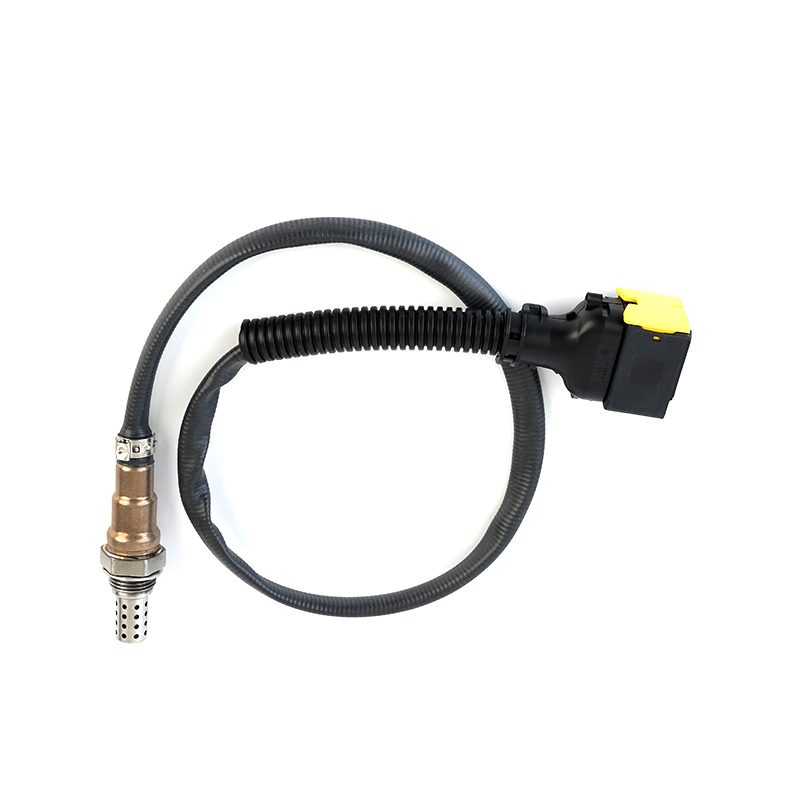
简体中文SOOK#:SKNH3001 OE#:28608771,2040W2,47520140 Application: New Holland
NH3 Sensor Manufacturers
Our ammonia gas sensors are designed for industrial production environments, offering precise and reliable detection of ammonia (NH₃) concentrations. Engineered to meet the demands of modern manufacturing, these sensors are ideal for applications in chemical plants, refrigeration systems, agricultural facilities, and environmental monitoring.
| Range | 0–200 ppm (~1 ppm detection limit) |
| Accuracy | ±5 ppm:±5% |
| T90 Response Time | 5–10 s |
| NH₃ Cross-Sensitivity | Significantly reduced compared to commercial NOx sensors |
-
-
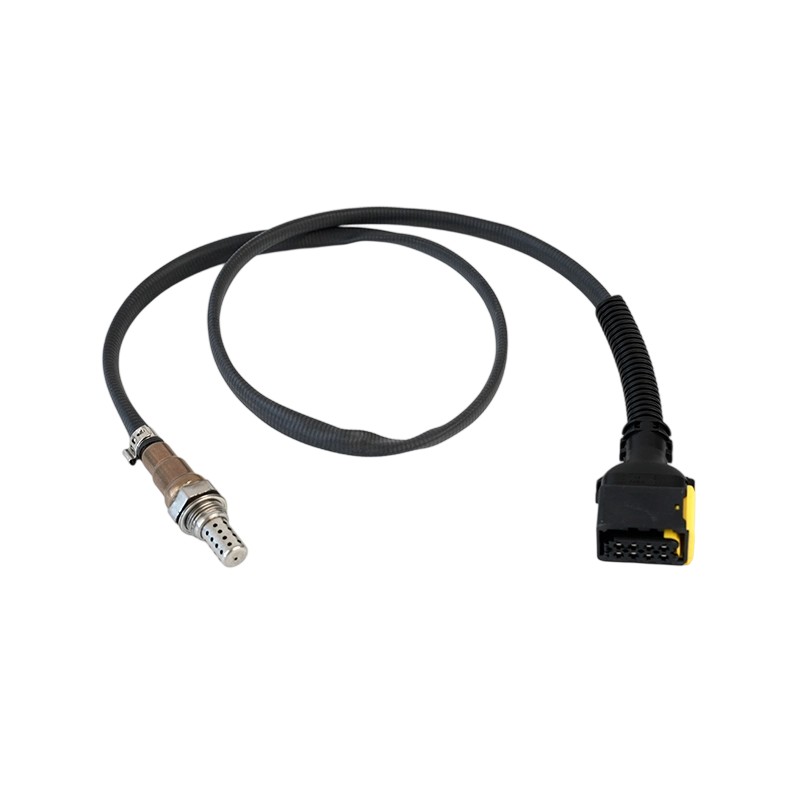 28608772,3030W1,47520142 Ammonia Sensor
SOOK#:SKNH3002 OE#:28608772,3030W1,47520142 Application: New Holland
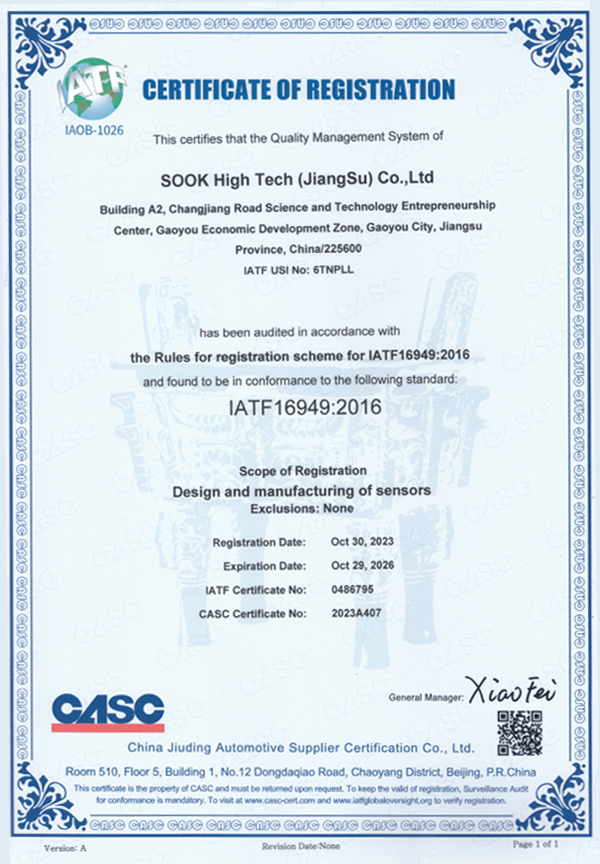
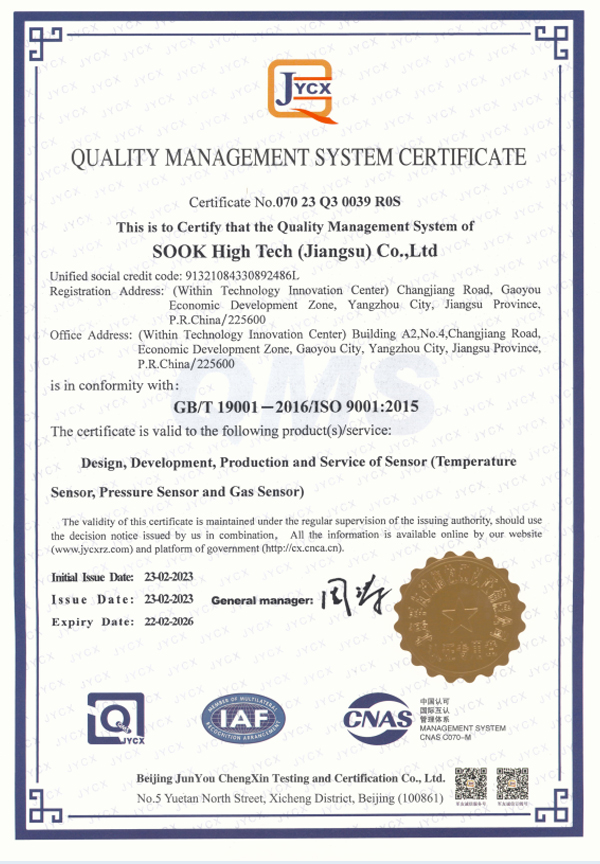
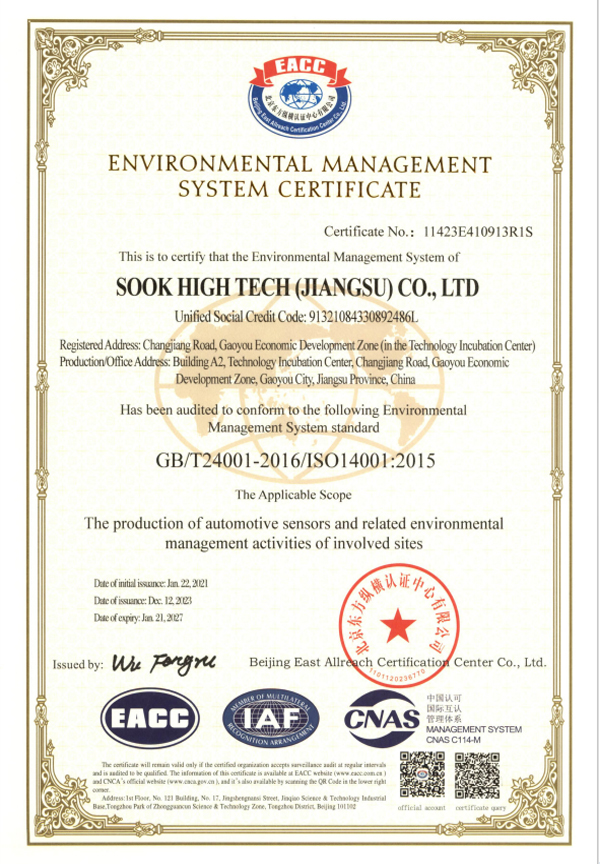
Certificate
Specializing in the research and development of intelligent vehicle exhaust temperature sensor, intelligent NOX sensor, NH3 sensor, H2 sensor and speed sensor, design, production, sales and integration.
ABOUT US
Sook High Tech (Jiangsu) Co., Ltd.
Sook High Tech (Jiangsu) Co., Ltd. was established in 2015, with a registered capital of 30.5 million yuan. Has won High-tech enterprise, National science and technology small and medium-sized enterprise, Software enterprise, Member of China Machinery Industry Standardization Technology Association, Council Members of Sensor and IoT Industry Association, Council Members of China Instrument Industry Association Sensor Branch and Council Members of Jiangsu Import and Export Chamber of Commerce.
As a professional China OEM NH3 Sensor Manufacturers and ODM Automotive Ammonia Sensor Factory
, SOOK High Tech focuses on the design, production, sales and integration of various sensors for smart cars and industrial fields, as well as cables and heaters for the industrial field.
Has an annual production capacity of 600,000 sensors of various types. There are more than 2,000 items of exhaust temperature sensors, 450 items of NOx sensors, and 1,300 items of ABS sensor, which are exported to Europe and the United States.
Message Feedback
Recent News
Learn about our industry exhibition information and recent events in our company.
-
Resistor Temperature Sensor Guide: Types, Selection Criteria and Applications
What Is a Resistor Temperature Sensor? A resistor temperature sensor is a passive component whose electrical resistance changes predictably with temperature. When you read a tempe...11 -
What Does a Thermocouple Do on a Furnace?
What Does a Thermocouple Do on a Furnace? Athermocouple on a furnace acts as the primary temperature sensing device, converting heat energy inside the combustion chamber or heatin...04 -
Types of Resistance Temperature Detectors: RTD Elements, Wiring, and Applications
A maintenance engineer recently compared two quotes for what looked like the same PT100 temperature probe. One supplier asked exactly one third of the other's price, and both data...28 -
Is a NOx Sensor Easy to Replace?
Is a NOx Sensor Easy to Replace? The Short Answer In most cases, replacing a NOx sensor is a moderately easy job for anyone comfortable with basic hand tools, and it typically tak...21
Ammonia Sensor Industry knowledge
What are the common types of ammonia sensors on the market?
1. Electrochemical Ammonia Sensor (NH₃ Sensor)
Detects ammonia concentration through an electrochemical reaction, offering fast response and high sensitivity, making it suitable for precise monitoring in chemical plants and laboratories.
Sook High Tech (Jiangsu) Co., Ltd.'s electrochemical sensors use high-purity electrode materials to ensure stable output over a wide temperature range.
2. Semiconductor NH₃ Sensor
This sensor uses changes in surface resistance of a metal oxide semiconductor to sense ammonia. Its structure is simple and cost-effective, making it commonly used in agricultural greenhouses and cold chain facilities.
The company's developed semiconductor sensor features a dustproof and waterproof housing, meeting the demands of harsh industrial environments.
3. Optical (Infrared) Ammonia Sensor
This sensor achieves non-contact detection by absorbing infrared light at specific wavelengths, offering strong anti-interference capabilities and suitable for large-scale emission monitoring systems.
Sook High Tech's optical sensor, equipped with a high-precision wavelength calibration module, enables low-concentration detection in the ppm level. 4. Capacitive Ammonia Sensor
This sensor uses the change in the dielectric constant of the adsorbed layer to measure ammonia concentration, offering a fast response time and suitable for rapid leak detection.
Our company's packaging process for capacitive sensors has achieved high reliability, with an annual production capacity of 600,000 units, enabling rapid delivery of high-volume projects.
How to choose an ammonia sensor installation location?
1. Close to potential leak sources
Installing the sensor upstream of a pipe joint, valve, or tank will detect ammonia leaks immediately.
Sook High Tech's sensors support a variety of wiring methods, allowing for flexible placement in confined spaces.
2. Well-ventilated areas
When selecting a location, avoid dead corners and ensure air circulation, allowing the sensor to obtain a representative gas sample.
Our products feature a self-cleaning function, maintaining measurement accuracy even in low-ventilation environments.
3. Preventing cross-interference
Avoid proximity to strong oxidizers, strong reducing agents, or high-temperature equipment, as these can affect the readings of electrochemical or semiconductor sensors.
Sook High Tech's sensor housings are made of corrosion-resistant materials, ensuring long-term operation in high-concentration chemical media. 4. Ease of Maintenance and Calibration
The installation height should be consistent with operator maintenance habits, typically between 1.2 and 1.8 meters, to facilitate regular replacement or calibration.
The company provides standardized calibration kits and a remote diagnostic platform to reduce maintenance costs.

ADD: No.85 Jiuyuan Road, Economic Development Zone, Gaoyou city ,Yangzhou city ,225600 Jiangsu Province, China.
Copyright © Sook High Tech (Jiangsu) Co., Ltd. All Rights Reserved. China NH3 Sensor Manufacturers Custom Automotive Ammonia Sensor Factory

